Pennyroyal Oil Market
2019–2024 Analysis & 2024–2029 Forecast
Pennyroyal Oil Market Overview
1.1 Product Overview
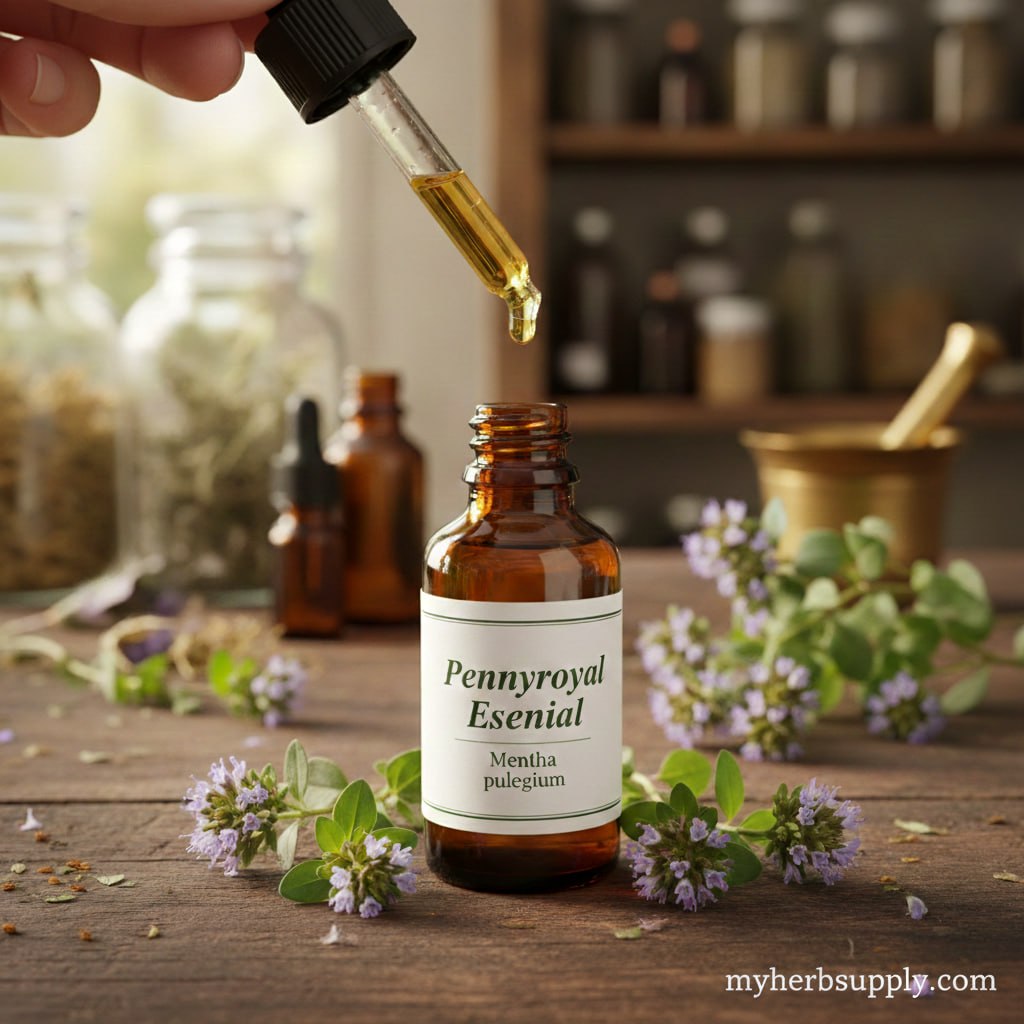
Pennyroyal oil is a highly aromatic essential oil steam-distilled from the aerial parts of Mentha pulegium (European pennyroyal) or Hedeoma pulegioides (American pennyroyal). It is one of the oldest known medicinal and aromatic herbs, with a sharp, minty scent distinct from other mint-family oils. The oil’s primary active constituent is pulegone (typically 55–95%), supplemented by isopulegone, menthone, and isomenthone, which contribute to its strong biological activity.
Commercially, pennyroyal oil is traded as a concentrated liquid, typically pale yellow to nearly colorless in appearance, with a flash point around 62°C. It is produced through steam or hydro-distillation and is available in various purity grades — food-grade, pharmaceutical-grade, and industrial/technical-grade — each carrying distinct price premiums and regulatory requirements.
Its established uses span aromatherapy, natural insect repellency (particularly against fleas and mosquitoes), personal care formulations, and traditional herbal medicine. Despite its utility, pennyroyal oil is subject to rigorous regulatory scrutiny due to the known hepatotoxicity and abortifacient properties of pulegone at high doses, requiring manufacturers and distributors to maintain strict quality control and safety documentation.
1.2 Market Segmentation
By Type
- Steam Distilled Oil: Accounts for the dominant market share (~78%) due to higher purity, better aroma consistency, and wider acceptance across pharmaceutical and cosmetic sectors.
- Cold-Pressed / Solvent-Extracted Oil: Smaller segment (~22%) used mainly in industrial applications and research. Generally lower cost but may carry residual solvent trace concerns.
By Application
- Aromatherapy & Wellness: Leading application segment; diffused for its purported calming and decongestant properties.
- Natural Insect Repellents & Pest Control: High-growth segment driven by consumer preference for botanical-based alternatives to synthetic repellents.
- Pharmaceuticals & Traditional Medicine: Utilized in herbal formulations across Asian and Latin American markets.
- Personal Care & Cosmetics: Small but expanding use in shampoos, soaps, and topical preparations for antimicrobial properties.
- Food Flavoring (Industrial): Limited, highly regulated use as a flavoring agent in certain markets.
- Research & Development: Academic and industrial R&D on pulegone derivatives and novel botanical insecticides.
1.3 Market Overview of Regions
- North America (~28%): Largest single-region market by value. Driven by strong consumer interest in natural health products and organic insect repellents.
- Europe (~26%): Spain, Morocco, and Turkey dominate raw material sourcing. Regulatory compliance (IFRA, EU Cosmetics Regulation) shapes end-use volumes.
- Asia-Pacific (~22%, CAGR 7.2%): Fastest-growing regional market. Traditional medicine systems in India and China underpin demand.
- Latin America: Brazil and Mexico are primary consumers and emerging producers. Growing awareness driving double-digit growth in select countries.
- Middle East & Africa: Morocco is a key supplier of raw plant material. Domestic consumption is limited but growing.
1.4 Market Dynamics
Key Drivers
- Rising global demand for natural and organic personal care products and insect repellents, displacing synthetic DEET-based formulations.
- Expansion of the aromatherapy market, valued at USD 2.9 billion globally in 2024, creating pull-through demand for niche essential oils.
- Growing awareness of the efficacy of pulegone-based compounds as natural pesticides in integrated pest management programs.
- Increasing disposable income and health consciousness in Asia-Pacific markets, particularly India and Southeast Asia.
Key Restraints
- Toxicological concerns: Pulegone is classified as a potential hepatotoxin. The FDA, EFSA, and IFRA have imposed use restrictions limiting penetration in food and pharmaceutical segments.
- Supply chain fragility: Production is heavily dependent on wild-harvested or small-farm cultivated Mentha pulegium, susceptible to climate variability.
- Price volatility: Raw material prices can fluctuate 20–40% year-on-year based on harvest quality in key-producing regions.
1.5 Limitations
This report relies on available industry data, trade statistics, and expert interviews as of late 2024. Certain market segments — particularly informal trade in developing markets — may be underrepresented. Forecast accuracy is subject to macroeconomic conditions, regulatory shifts, and commodity price dynamics.
1.6 Opportunities
- Development of low-pulegone or pulegone-free pennyroyal cultivars through agricultural breeding programs could unlock regulated markets currently closed to conventional pennyroyal oil.
- Expansion of certified organic pennyroyal oil supply chains, commanding 25–40% price premiums in European and North American retail.
- Application in novel biopesticide formulations, where EPA and EU regulatory approval pipelines are increasingly favorable for plant-based active ingredients.
- E-commerce and direct-to-consumer channels are enabling niche essential oil brands to reach global customers without traditional distribution intermediaries.
1.7 Industry News and Policies
In 2023, the International Fragrance Association (IFRA) reaffirmed its restriction on pennyroyal oil use in leave-on cosmetic products above 0.2% concentration, citing updated pulegone safety data.
The EU Cosmetics Regulation (1223/2009) continues to list pulegone as a substance with usage restrictions, requiring precise labeling and concentration monitoring. In the United States, the FDA classifies pennyroyal oil as GRAS only for very limited food flavoring applications at trace levels. The EPA has granted several pennyroyal-based formulations registration under FIFRA as minimum-risk pesticides.
Morocco’s Ministry of Agriculture launched a sustainable wild-plant harvesting program in 2022 that includes Mentha pulegium, aimed at stabilizing supply and improving environmental sustainability credentials of Moroccan essential oil exports.
Pennyroyal Oil Industry Chain Analysis
2.1 Upstream Raw Material Suppliers
The upstream segment comprises wild harvesters, small-scale farmers, and agricultural cooperatives in key sourcing geographies. Top raw material origin countries include Morocco, Spain, Bulgaria, Turkey, India, and the United States. Morocco and Spain collectively account for an estimated 55–60% of globally traded raw plant material.
Typical fresh herb-to-oil yield is 0.5–1.5%, meaning 100–200 kg of fresh herb is required to produce 1 kg of essential oil. Seasonal harvesting (typically May–July in the Northern Hemisphere) concentrates production into a narrow annual window.
2.2 Major Players
| Company | HQ | Key Segment | Est. Revenue (USD M, 2024) |
|---|---|---|---|
| Sigma-Aldrich / Merck KGaA | Germany | Research / Pharmaceutical Grade | 12–18* |
| doTERRA International | USA | Aromatherapy / Wellness | 8–14* |
| Young Living Essential Oils | USA | Direct Sales / Aromatherapy | 6–10* |
| NOW Foods | USA | Health & Wellness Retail | 4–7* |
| Treatt plc | UK | Industrial / Flavor & Fragrance | 3–5* |
| Plant Therapy Essential Oils | USA | Retail Aromatherapy | 2–4* |
| Moroccan Herbal Distilleries (various) | Morocco | Bulk Export / Commodity | 10–20* |
| Mountain Rose Herbs | USA | Certified Organic | 2–3* |
*Estimates for pennyroyal oil segment only. Figures are indicative based on available market intelligence.
2.3 Production Process Analysis
- Cultivation / Wild Harvesting: Plant material is either cultivated on dedicated herb farms or collected from wild stands. Cultivated supply is preferred by pharmaceutical and premium cosmetic buyers.
- Pre-Processing: Fresh herb is collected, sorted to remove foreign matter, and wilted (partially dried) to reduce moisture content and improve distillation yield.
- Steam Distillation: Industry-standard extraction. Steam passes through plant material, volatilizing the essential oil; vapor is condensed and oil separated from the hydrosol.
- Separation & Decanting: Pennyroyal oil, being lighter than water, floats and is decanted. Residual water content is removed through centrifugation or anhydrous sodium sulfate treatment.
- Quality Analysis: Finished oil is analyzed by GC/MS to verify pulegone content and detect adulterants. Certificates of Analysis (CoA) are generated for each batch.
- Filling, Packaging & Storage: Oil is filled into dark glass or stainless-steel containers under inert atmosphere. Storage at 5–15°C extends shelf life to 3–5 years.
2.4 Cost Analysis
The following represents indicative cost structure for a mid-scale Moroccan distiller:
| Cost Component | Share of Total Cost (%) |
|---|---|
| Raw Material (herb procurement) | 42% |
| Energy (steam generation / fuel) | 18% |
| Labor (harvesting, processing) | 16% |
| Overheads (equipment, facility, depreciation) | 10% |
| Quality Control & Certification | 7% |
| Packaging & Storage | 5% |
| Other / Miscellaneous | 2% |
Typical ex-works production cost ranges from USD 18–32/kg in Morocco and USD 28–45/kg in Western Europe. Certified organic production commands a 30–45% cost premium.
2.5 Market Channels
- B2B Direct Sales: Large essential oil companies source directly from distillers. Dominates the pharmaceutical and industrial segments.
- Specialty Distributors: Essential oil trading companies aggregate supply from multiple producers and resell to formulators and brand owners.
- E-Commerce / DTC: Platforms such as Amazon and iHerb have significantly lowered barriers for small brands and consumers.
- Natural Health / Organic Retail: Brick-and-mortar health food stores and co-ops remain important in North America and Europe.
- Export Trade Fairs: Exhibitions such as World Perfumery Congress and Esxence remain key B2B networking and sourcing venues.
2.6 Major Downstream Buyers
- Essential Oil Brands & Aromatherapy Companies
- Natural Personal Care & Cosmetics Manufacturers
- Pharmaceutical Herbal Product Companies
- Biopesticide & Natural Insect Repellent Formulators
- Food & Beverage Flavor Houses (limited, regulated use)
- Academic & Industrial Researchers
Value Analysis, Production, Growth Rate and Price Analysis by Type
3.1 Production by Type (2019–2024, Metric Tons)
| Year | Steam Distilled (MT) | Cold-Pressed / Extracted (MT) | Total (MT) | YoY Growth (%) |
|---|---|---|---|---|
| 2019 | 142 | 38 | 180 | — |
| 2020 | 138 | 36 | 174 | -3.3% |
| 2021 | 148 | 39 | 187 | +7.5% |
| 2022 | 160 | 42 | 202 | +8.0% |
| 2023 | 170 | 44 | 214 | +5.9% |
| 2024e | 181 | 47 | 228 | +6.5% |
Global pennyroyal oil production reached an estimated 228 metric tons in 2024, representing a CAGR of approximately 4.8% from 2019 to 2024. The brief contraction in 2020 is attributed to COVID-19-related supply chain disruptions in key producing regions.
3.2 Market Value by Type (USD Million)
| Year | Steam Distilled (USD M) | Cold-Pressed (USD M) | Total Market Value (USD M) |
|---|---|---|---|
| 2019 | 14.8 | 3.1 | 17.9 |
| 2020 | 13.9 | 2.9 | 16.8 |
| 2021 | 16.2 | 3.4 | 19.6 |
| 2022 | 18.8 | 3.8 | 22.6 |
| 2023 | 21.0 | 4.2 | 25.2 |
| 2024e | 23.5 | 4.7 | 28.2 |
3.3 Price Analysis by Type (USD/kg)
| Year | Steam Distilled (USD/kg) | Cold-Pressed (USD/kg) | Organic Premium (USD/kg) |
|---|---|---|---|
| 2019 | 99 | 81 | 145 |
| 2020 | 101 | 82 | 148 |
| 2021 | 110 | 87 | 158 |
| 2022 | 117 | 90 | 168 |
| 2023 | 124 | 95 | 175 |
| 2024e | 130 | 100 | 183 |
Organic-certified oil commands a consistent 35–45% premium over conventional steam-distilled oil, attracting investment from producers pursuing organic transition programs.
Downstream Characteristics, Consumption and Market Share by Application
4.1 Application Segments Overview (2024)
| Application | Est. Consumption 2024 (MT) | Market Share (%) | CAGR 2019–2024 (%) |
|---|---|---|---|
| Aromatherapy & Wellness | 71 | 31.1% | 5.9% |
| Natural Insect Repellents | 59 | 25.9% | 8.2% |
| Pharmaceuticals / Herbal Medicine | 41 | 18.0% | 3.4% |
| Personal Care & Cosmetics | 32 | 14.0% | 6.7% |
| Food Flavoring (Industrial) | 9 | 3.9% | 1.1% |
| R&D & Other | 16 | 7.0% | 4.5% |
4.2 Segment Analysis
Aromatherapy & Wellness
The aromatherapy segment is the largest consumer of pennyroyal oil, accounting for 31.1% of 2024 demand volume. Consumer interest in essential oils for stress relief, respiratory support, and home wellness has grown substantially since 2020. Key markets are the United States, Germany, the UK, and Australia.
Natural Insect Repellents
The fastest-growing application with an 8.2% CAGR from 2019 to 2024. Growing consumer aversion to DEET-based repellents, coupled with expanding evidence of pennyroyal oil’s efficacy against fleas, mosquitoes, and ticks, is driving formulator interest. Especially dynamic in pet care (flea collars, sprays) and outdoor lifestyle products.
Pharmaceuticals & Traditional Medicine
Significant in absolute volume, particularly in Traditional Chinese Medicine, Ayurvedic preparations, and Latin American herbal medicine markets. Growth is moderate (3.4% CAGR) due to regulatory scrutiny limiting expansion in Western pharmaceutical markets.
Personal Care & Cosmetics
Pennyroyal oil’s antimicrobial and refreshing scent profile supports use in shampoos, conditioners, and topical creams. The segment has grown at 6.7% CAGR, with growth concentrated in natural and organic beauty lines. IFRA usage restrictions are a binding constraint on concentration levels in leave-on products.
Production Volume, Price, Gross Margin, and Revenue by Region (2019–2024)
5.1 Production by Region (MT)
| Region | 2019 | 2020 | 2021 | 2022 | 2023 | 2024e |
|---|---|---|---|---|---|---|
| Europe | 68 | 63 | 72 | 78 | 83 | 89 |
| Middle East & Africa | 61 | 58 | 64 | 71 | 75 | 80 |
| North America | 22 | 22 | 24 | 26 | 28 | 29 |
| Asia-Pacific | 21 | 21 | 21 | 19 | 20 | 22 |
| Latin America | 8 | 10 | 6 | 8 | 8 | 8 |
| TOTAL | 180 | 174 | 187 | 202 | 214 | 228 |
5.2 Revenue and Gross Margin by Region (2024e)
| Region | Revenue (USD M) | Avg. Price (USD/kg) | Est. Gross Margin (%) |
|---|---|---|---|
| Europe | 10.6 | 119 | 38–44% |
| Middle East & Africa | 8.8 | 110 | 32–38% |
| North America | 4.9 | 169 | 44–52% |
| Asia-Pacific | 2.9 | 132 | 30–36% |
| Latin America | 1.0 | 120 | 28–34% |
| TOTAL / AVG | 28.2 | 124 | 36–44% |
Production, Consumption, Export and Import by Region (2019–2024)
6.1 Trade Flow Summary
| Region | Net Trade Position (2024e) | Primary Export Destination | Primary Import Source |
|---|---|---|---|
| Europe | Net Exporter (+31 MT) | N. America, Asia-Pacific | Intra-regional |
| Middle East & Africa | Net Exporter (+52 MT) | Europe, N. America | N/A |
| North America | Net Importer (-38 MT) | N/A | Europe, ME&A |
| Asia-Pacific | Net Importer (-18 MT) | N/A | Europe, ME&A |
| Latin America | Balanced / Marginal | N. America | Europe |
6.2 Export Value Trends (USD Million)
| Region | 2019 | 2020 | 2021 | 2022 | 2023 | 2024e |
|---|---|---|---|---|---|---|
| Europe | 3.8 | 3.4 | 4.2 | 5.1 | 5.7 | 6.3 |
| Middle East & Africa | 3.1 | 2.9 | 3.4 | 4.0 | 4.5 | 5.0 |
| North America | 0.8 | 0.7 | 0.9 | 1.0 | 1.1 | 1.2 |
| Asia-Pacific | 0.6 | 0.5 | 0.6 | 0.6 | 0.7 | 0.8 |
| Latin America | 0.3 | 0.3 | 0.3 | 0.4 | 0.4 | 0.4 |
Global pennyroyal oil export trade has grown at approximately 5.2% CAGR from 2019 to 2024. Morocco has emerged as the single largest exporter by volume, benefiting from favorable agricultural conditions and active government support.
Market Status and SWOT Analysis by Region
7.1 North America
Large, affluent consumer base; strong natural product retail infrastructure; high per-unit pricing.
Limited domestic production; high dependence on imports; regulatory complexity (FDA/EPA).
Growing consumer demand for DEET-free insect repellents; expansion of organic personal care.
Supply disruption risk from import dependency; tightening FDA pulegone guidelines.
7.2 Europe
Major production hub (Spain, Bulgaria); sophisticated F&F industry; strong certification ecosystem.
IFRA and EU Cosmetics Regulation constrain end-use formulation flexibility.
Organic and sustainable sourcing trends; bio-based insecticide regulation easing.
Increasing competition from lower-cost Moroccan and Turkish suppliers.
7.3 Asia-Pacific
Large traditional medicine market; fast-growing middle class; low raw material costs in India.
Fragmented regulatory frameworks; quality inconsistency in domestic supply.
Rising natural cosmetics adoption; government support for Ayurvedic and TCM industries.
Limited regulatory harmonization; counterfeit/adulterated product risk.
7.4 Middle East & Africa
Low-cost production base (Morocco); established export relationships; biodiversity-rich sourcing.
Infrastructure limitations; climate vulnerability; small domestic consumption base.
EU sustainability sourcing requirements favor traceable Moroccan supply chains.
Climate change impacts on wild-harvested plant populations; currency volatility.
Competitive Landscape and Company Profiles
8.1 Market Concentration
The global pennyroyal oil market is characterized by moderate fragmentation at the producer level and moderate concentration at the brand/distribution level. The top 10 companies collectively account for an estimated 45–55% of global market value. Entry barriers are relatively low at the basic distillation level but escalate significantly for pharmaceutical-grade, certified organic, or specialty-positioned products.
8.2 Key Player Profiles
doTERRA International, LLC (USA)
One of the world’s largest essential oil companies, operating a direct sales model with over 6 million distributors globally. Sources pennyroyal oil through its Co-Impact Sourcing program. Carries the Certified Pure Tested Grade (CPTG) quality standard.
Young Living Essential Oils (USA)
Founded in 1993, Young Living operates its own farms and distilleries, giving it significant vertical integration advantages. Markets pennyroyal oil under its Seed to Seal quality promise. Significant presence in North America, Europe, and Asia-Pacific.
Treatt plc (UK)
A specialist ingredients supplier to the flavor, fragrance, and FMCG industries. Listed on the London Stock Exchange, Treatt has strong relationships with global flavor and fragrance houses.
NOW Foods (USA)
A health supplement and natural products company offering pennyroyal oil in retail packaging across health food stores and online channels. Competes on price and accessibility.
8.3 Market Share Estimation (2024, by Revenue)
| Company / Group | Estimated Revenue Share (%) |
|---|---|
| doTERRA International | 10–13% |
| Young Living Essential Oils | 7–10% |
| Moroccan Independent Distillers (collective) | 9–12% |
| NOW Foods | 4–6% |
| Treatt plc | 3–5% |
| Plant Therapy | 2–4% |
| Other / Fragmented | 50–65% |
Market Analysis and Forecast by Type and Application (2024–2029)
9.1 Production Forecast by Type
| Year | Steam Distilled (MT) | Cold-Pressed (MT) | Total (MT) | YoY Growth (%) |
|---|---|---|---|---|
| 2024e | 181 | 47 | 228 | 6.5% |
| 2025f | 193 | 50 | 243 | 6.6% |
| 2026f | 207 | 53 | 260 | 7.0% |
| 2027f | 221 | 57 | 278 | 6.9% |
| 2028f | 236 | 61 | 297 | 6.8% |
| 2029f | 252 | 65 | 317 | 6.7% |
Total pennyroyal oil production is forecast to reach approximately 317 metric tons by 2029, representing a CAGR of approximately 6.8% from 2024 to 2029.
9.2 Market Value Forecast by Type (USD Million)
| Year | Steam Distilled | Cold-Pressed | Total Market Value |
|---|---|---|---|
| 2024e | 23.5 | 4.7 | 28.2 |
| 2025f | 26.0 | 5.2 | 31.2 |
| 2026f | 28.8 | 5.7 | 34.5 |
| 2027f | 32.0 | 6.3 | 38.3 |
| 2028f | 35.5 | 7.0 | 42.5 |
| 2029f | 39.5 | 7.7 | 47.2 |
The total pennyroyal oil market is projected to reach USD 47.2 million by 2029, at a CAGR of approximately 10.8%. Market value growth outpaces volume growth due to anticipated continued price increases from premium natural product segments.
9.3 Application Forecast (2024–2029)
| Application | 2024e (MT) | 2029f (MT) | CAGR (%) |
|---|---|---|---|
| Aromatherapy & Wellness | 71 | 94 | 5.8% |
| Natural Insect Repellents | 59 | 96 | 10.2% |
| Pharmaceuticals / Herbal Medicine | 41 | 53 | 5.3% |
| Personal Care & Cosmetics | 32 | 46 | 7.5% |
| Food Flavoring (Industrial) | 9 | 10 | 2.1% |
| R&D & Other | 16 | 18 | 2.4% |
| TOTAL | 228 | 317 | 6.8% |
Market Analysis and Forecast by Region (2024–2029)
10.1 Regional Market Value Forecast (USD Million)
| Region | 2024e | 2025f | 2026f | 2027f | 2028f | 2029f | CAGR |
|---|---|---|---|---|---|---|---|
| North America | 7.8 | 8.8 | 9.9 | 11.1 | 12.4 | 13.9 | 12.2% |
| Europe | 7.4 | 8.2 | 9.1 | 10.1 | 11.1 | 12.2 | 10.5% |
| Asia-Pacific | 6.2 | 7.0 | 8.0 | 9.1 | 10.4 | 11.8 | 13.7% |
| ME & Africa | 4.8 | 5.4 | 6.0 | 6.7 | 7.4 | 8.2 | 11.3% |
| Latin America | 2.0 | 2.3 | 2.6 | 2.9 | 3.2 | 3.5 | 11.8% |
| TOTAL | 28.2 | 31.7 | 35.6 | 39.9 | 44.5 | 47.2 | 10.8% |
Asia-Pacific is projected to be the fastest-growing regional market at a 13.7% CAGR, driven by India’s expanding natural health product industry, China’s traditional medicine modernization, and rapid middle-class growth in Southeast Asia.
10.2 Regional Market Share Shift (2024 vs. 2029)
| Region | 2024 Share (%) | 2029 Share (%) |
|---|---|---|
| North America | 27.7% | 29.5% |
| Europe | 26.2% | 25.8% |
| Asia-Pacific | 22.0% | 25.0% |
| Middle East & Africa | 17.0% | 17.4% |
| Latin America | 7.1% | 7.4% |
Industry Characteristics, Key Factors, New Entrants SWOT & Investment Feasibility
11.1 Industry Characteristics
- Fragmented Supply Base: Hundreds of small producers globally, with concentration at the brand and distribution tier.
- Commodity + Specialty Duality: Bulk commodity-grade oils coexist with premium, certified, and specialty grades at significant price differentials.
- Seasonal Production: Annual harvesting cycle creates inherent seasonality in supply; buyers manage this through forward contracts and inventory financing.
- Regulatory Sensitivity: A change in IFRA standards, FDA guidance, or EU cosmetics rules can materially shift demand in specific segments.
- Traceability Trend: Growing buyer and consumer demand for supply chain transparency is raising the bar for documentation, GPS-farm tracking, and third-party audits.
11.2 Key Success Factors
- Quality Assurance: GC/MS certification and consistent CoA documentation are minimum requirements for accessing premium market segments.
- Certification Portfolio: Organic, Fair Trade, and sustainability certifications differentiate suppliers and command price premiums.
- Supply Chain Reliability: Buyers increasingly prefer suppliers with multi-source supply chains or safety stock capabilities to buffer seasonal variability.
- Regulatory Expertise: Navigating IFRA, FDA, EPA, and EU regulations is a core competency.
- Branding & Consumer Trust: For DTC brands, transparent sourcing claims and third-party testing communication are key purchase drivers.
11.3 New Entrant SWOT Analysis
Lower capital requirements at distillation level; growing global demand; accessible e-commerce channels; niche positioning opportunities.
Lack of established supply contracts; limited brand recognition; high certification costs relative to initial revenue; pulegone safety liability risk.
Organic/sustainable certification gap — demand exceeds certified supply; DTC digital brands can scale quickly; novel biopesticide applications opening new markets.
Regulatory uncertainty (potential tightening of pulegone limits); incumbents’ scale advantages; commodity price volatility squeezing margins for undiversified entrants.
11.4 Investment Feasibility Analysis
Mid-Scale Distillery (2–5 MT/year capacity):
| Parameter | Estimate |
|---|---|
| Capital Expenditure (equipment, facility) | USD 180,000 – 350,000 |
| Annual Operating Cost (at 4 MT/year) | USD 280,000 – 420,000 |
| Revenue at Average Market Price (USD 130/kg) | USD 520,000 |
| Estimated EBITDA Margin | 20–28% |
| Payback Period | 3–5 years |
| Key Risk Factors | Raw material cost, harvest yields, price volatility, regulatory compliance |
Investment in pennyroyal oil production is feasible at mid-scale under current market conditions, particularly for producers able to attain organic certification within the first 2–3 years. The most favorable investment profiles are found in Morocco and India, where raw material costs and labor are lower and export market access is well-established.
Market Conclusion
12.1 Executive Summary of Findings
The global pennyroyal oil market is a small but dynamic segment of the broader essential oils industry. Valued at an estimated USD 28.2 million in 2024 and projected to reach USD 47.2 million by 2029 at a CAGR of approximately 10.8%, the market is on a sustained growth trajectory underpinned by structural shifts in consumer preference toward natural and botanical products.
12.2 Key Conclusions by Chapter
- Market Drivers: Primarily driven by natural insect repellent demand and aromatherapy growth. These two segments collectively account for 57% of 2024 consumption.
- Price Trajectory: Prices have risen at a 5.6% CAGR from 2019–2024 and are expected to continue rising modestly as demand from premium segments outpaces supply expansion.
- Competitive Landscape: Moderately fragmented. doTERRA and Young Living hold leadership in the consumer segment; Moroccan cooperatives dominate bulk trade.
- Fastest-Growing Segment: Natural insect repellents (10.2% CAGR, 2024–2029) and personal care & cosmetics (7.5% CAGR) represent the highest-growth opportunities.
- Regional Outlook: Asia-Pacific is the fastest-growing regional market (13.7% CAGR); North America retains the highest market value share through 2029.
- Regulatory Risk: Pulegone toxicology remains the most significant systemic risk. Any tightening of IFRA or FDA pulegone limits could materially constrain specific application segments.
- Investment Opportunity: The certified organic pennyroyal oil supply deficit relative to demand represents the most attractive near-term investment opportunity for producers.
12.3 Strategic Recommendations
- Producers: Prioritize organic certification and invest in quality assurance infrastructure to access premium market tiers. Consider supply chain vertical integration to improve margin capture.
- Buyers / Formulators: Diversify sourcing geographically to reduce dependency on any single-origin supply. Establish multi-year supply agreements to hedge against price volatility.
- Investors: Focus on mid-scale production investments in Morocco or India with an organic transition strategy. Diversify across 3–5 essential oil species to reduce single-product risk.
- Brand Owners: Leverage supply chain transparency and third-party testing as key brand differentiators. Invest in consumer education on safety and proper use to mitigate reputational risk associated with pulegone toxicology.
Disclaimer: This report has been prepared using available public data, industry sources, and analytical models. While every effort has been made to ensure accuracy, market data estimates carry inherent uncertainty. Actual market outcomes may differ materially from the projections presented. This report is intended for informational purposes and does not constitute investment or legal advice. Users should conduct independent due diligence before making business or investment decisions.